Tools That Verify AI-Generated Code Before Merge (2026)
Review bots, scanners, test generators and environment platforms each prove something different about an AI-written change. What each layer catches, and where it stops.
AI code verification tools fall into four layers: AI code review bots, static analysis and security scanners, AI test generators, and environment platforms that run a change against the services it calls. Each layer proves something different about an AI-written change, and only the last shows that the change works with its real dependencies before merge.
That difference matters most on a system of many services. A team running 80 microservices on Kubernetes can pass every check on the diff and still break the service downstream, because none of those checks makes the call. The complete guide to verifying AI-generated code explains why agents widen that runtime gap.
The short answer for a platform team is to run all four, cheapest first. Checks on the diff catch most defects in seconds. The environment check catches the ones that only appear when services talk to each other.
What does each kind of AI code verification tool prove?
Each layer answers a different question, from whether the change reads correctly to whether it works with everything it calls. A pass on one layer says nothing about the layers above it.
| Layer | Example tools | A pass proves | It can’t see | Best fit |
|---|---|---|---|---|
| AI code review | CodeRabbit, Greptile, GitHub Copilot code review, Qodo | The diff reads correctly against the codebase and your conventions | What happens when the code runs | First pass on every pull request, before a person reviews |
| Static analysis and security scanners | SonarQube, Semgrep, Snyk Code, CodeQL | The code matches no known bug or vulnerability pattern | Logic errors that break no rule, and behavior across services | A required check on every pull request |
| AI test generators | Diffblue, tests the coding agent writes | The code meets the tests’ expectations, on its own | Whether the expectations are right, and anything past the service boundary | Raising unit coverage on code that has little |
| Environment platforms | Signadot, Bunnyshell, Testkube, shared staging | The change works with the real services, queues and data it calls | Production load and traffic your tests don’t exercise | Every change that crosses a service boundary |
None of these replaces another. A review bot can flag a renamed field in a message. Only a run against the service that sends that message shows whether requests fail.
AI code review tools: CodeRabbit, Greptile, Copilot and Qodo
AI code review tools read the pull request with context from the rest of the codebase and comment the way a reviewer would. They’re the fastest way to catch convention drift, risky patterns and obvious defects in agent output.
CodeRabbit reviews pull requests, triages them and explains each change. Greptile reviews against a graph of the whole codebase. GitHub Copilot code review flags issues on the pull request and suggests fixes, and Qodo runs review workflows in the IDE and on the pull request.
Enforcing your conventions is the main reason to run one. In Qodo’s 2026 survey of 500 U.S. developers and 300 engineering leaders, only 35% of developers said coding agents always follow organizational standards (Qodo). Qodo sells AI code review, so weigh the number accordingly. The gap it describes is the one a review bot exists to close.
What a review bot can’t do is run the code. It infers behavior from text, so a field renamed in one service and still sent under the old name by another looks fine in the diff. Some review and agent tools now run code in a private runtime. The levels of runtime verification for coding agents differ in how much of the system they reach.
Static analysis and security scanners
Static analysis and security scanners check the code against known rules for bugs, vulnerabilities and leaked secrets. They’re deterministic, finish in seconds and don’t tire on a large diff, so they belong on every pull request as a required check.
SonarQube analyzes code quality and security, and Sonar pairs it with agentic review for AI-written code. Semgrep and Snyk Code run static application security testing (SAST) with rules you can extend. CodeQL queries code as data, and GitHub runs it in code scanning.
Agent output needs them because code that compiles isn’t code that’s safe. Veracode runs a fixed set of security coding tasks against leading models every few months. In its October 2026 snapshot the average security pass rate rose to 62%, which still left vulnerabilities in 38% of the generated code (Veracode). Veracode sells security testing, and those are its benchmark tasks, not a measured defect rate in production.
Scanners stop at the code they can read. They can tell you an input reaches a SQL query unescaped. They can’t tell you that a new required field breaks the three services that call this one.
AI test generators
AI test generators write tests for code that lacks them, and every coding agent writes tests for its own changes. They raise coverage fast, but a generated test proves the code does what the test expects, which isn’t always what you meant.
Diffblue generates and maintains unit tests for Java applications across whole codebases. Coding agents such as Claude Code, Cursor and Codex write tests next to every change they make.
The risk is circular. A study accepted at ISSTA 2026 found that models given buggy code tend to write tests that assert the bug instead of exposing it (Zhao, Zhou and Cohen). Their remedy was to generate tests from a specification rather than from the code. A test that encodes the bug passes, and the bug ships with a green check.
Treat generated unit tests as coverage, not acceptance. Keep acceptance tests written from the specification, somewhere the agent can’t edit them to make a change pass. Even good unit tests stop at the service boundary, where mocks stand in for everything else. Agent changes pass those mocks and still break real dependencies, the pattern AI code testing for cloud-native systems traces.
Environment platforms: running the change against the services it calls
Environment platforms run the change in a production-like environment, with the real services, queues and databases it depends on, and run your tests against it before merge. It’s the only layer that shows a change works across service boundaries.
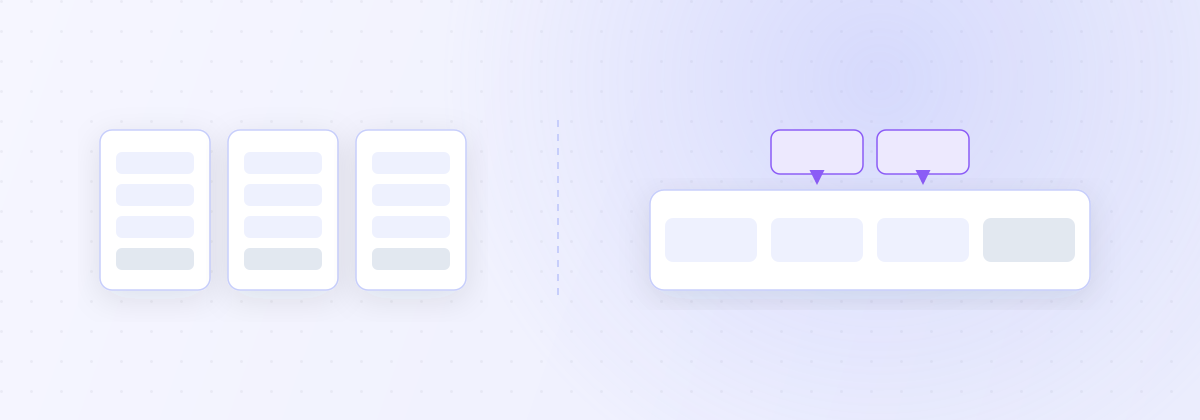
Shared staging is the default, but one environment serializes every change, and at agent volume it’s always queued or broken. Ephemeral environments fix that, in one of two shapes. A full copy of the stack per pull request, the model Bunnyshell offers, is faithful, but with 80 services every copy takes time to start and money to run. The other shape runs only the services a change touched and shares the rest.
Testkube sits beside both shapes. It orchestrates any test framework inside the clusters you already run, which settles where tests execute but not which version of each service they reach.
This is what Signadot does. Each change gets a Sandbox, Signadot’s lightweight ephemeral environment, which holds only the workloads the change modified. Every other service is the shared stable copy already running in your cluster, and requests carrying the Sandbox’s routing key reach the changed version.
Jobs run your existing suites (Playwright, Cypress, Postman, k6) in the cluster against that Sandbox. SmartTests run against both the Sandbox and the stable version and flag the API differences that matter. Coding agents create Sandboxes through the Signadot MCP server and run the tests they choose with the signadot-validate agent skill before they open a pull request.
Signadot runs tests. It doesn’t write them or read the diff, so review bots and scanners still go first. When a change can’t share the cluster’s data safely, such as a schema migration, the Sandbox declares its own resources, which platform teams define once.
What to look for in AI code verification tools
When you compare tools to verify AI-generated code across dozens of services, five criteria matter more than feature lists. Most of them come down to where a tool runs, what evidence it leaves and whether an agent can call it.
- Where it runs: a check that needs your services has to run in or next to your cluster, with the same network, secrets and data the change will use.
- Evidence on the pull request: results a reviewer can read, such as a failing test with its logs or a diff of API responses, not a score.
- Agent access: a CLI, API or MCP server the coding agent can call during its session, so it fixes failures before it opens the pull request.
- Cost per check: what one run costs in time and compute when agents open dozens of pull requests a day. A copy of 80 services costs far more per run than a Sandbox of one.
- Signal over noise: how often a failure is real. A check that fails on shared state somebody else changed teaches agents and people to retry instead of fix.
How to assemble a verification stack for 80 microservices
Order the checks by cost, cheapest first, and move the expensive one into the agent’s own loop. For most Kubernetes teams that means one check inside the agent’s session and three on every pull request.
- In the agent’s session: the agent runs its change in a Sandbox against the services it calls, with the tests it chose, and fixes failures before anyone sees them.
- On the pull request: an AI review bot, plus static analysis and security scanners, as required checks.
- In CI: unit tests, generated or written, plus the integration suite as a Job against the pull request’s Sandbox.
- In review: a person checks intent and the evidence from steps 1 to 3, not every line.
The layers also work together. The CodeRabbit and Signadot tutorial runs a service’s existing Playwright tests in a Sandbox on every pull request. When a test fails, CodeRabbit explains the failing check and opens a repair that goes through the same tests.
Start with the layer you don’t have yet. Most teams already run a scanner and are trying a review bot, so the missing one is usually the environment check. Pick one service with many callers, run its integration tests against a Sandbox on every pull request for two weeks, and count the failures the diff checks missed.
Frequently asked questions
What tools can verify AI-generated code before it's merged?
Four kinds, and a platform team needs more than one. AI code review tools such as CodeRabbit and Greptile read the diff. Static analysis and security scanners such as SonarQube and Semgrep check it against known rules. Test generators add unit tests. Environment platforms such as Signadot run the change against the services it calls, the only check that shows it works across service boundaries.
Are AI code review tools enough to verify AI-generated code?
No. A review bot reads the change and infers what it does, so it catches convention drift, risky patterns and obvious defects. It can't show the code works when it runs, especially when the change alters a request or message another service depends on. Pair it with scanners for known vulnerabilities and with tests that run the change against its real dependencies.
What's the difference between AI code quality tools and AI code testing tools?
AI code quality tools inspect code without running it. Review bots, linters and static analysis report style problems, likely bugs and vulnerabilities from the source. AI code testing tools execute it, through generated unit tests or a test suite run against a deployed environment. Quality tools are fast and cheap on every pull request. Testing tools are the only way to see behavior.
Can AI-generated tests verify AI-generated code?
Only partly. A generated test proves the code matches the test's expectations, and a 2026 ISSTA study found that models writing tests from buggy code tend to encode the bug. Use generated unit tests for coverage. Keep acceptance tests written from the specification, outside the agent's reach, and run them against a production-like environment.
Do static analysis tools catch the bugs AI-generated code introduces?
They catch the bugs that match a known rule: injection flaws, weak cryptography, leaked secrets and common error patterns. That covers much of what AI-generated code gets wrong on security, and scanners finish in seconds on every pull request. They miss logic errors that break no rule, and changes that break the contract with another service.