Sandbox Testing: The DevEx Game-Changer for Microservices
In today’s fast-paced development world, the gap between writing code and seeing it fully integrated can feel like an endless waiting game — especially in microservices-based systems. This article from The New Stack dives into the heart of that disconnect, exploring how modern engineering teams are bogged down by slow, fragmented feedback loops. It introduces sandbox environments as a game-changing solution, offering high-fidelity testing at inner-loop speed without the usual infrastructure overhead. By isolating each pull request in its own environment, sandboxes help developers catch issues earlier, collaborate more fluidly across teams, and stay in their flow — all while delivering higher-quality software, faster.
Originally posted on The New Stack.
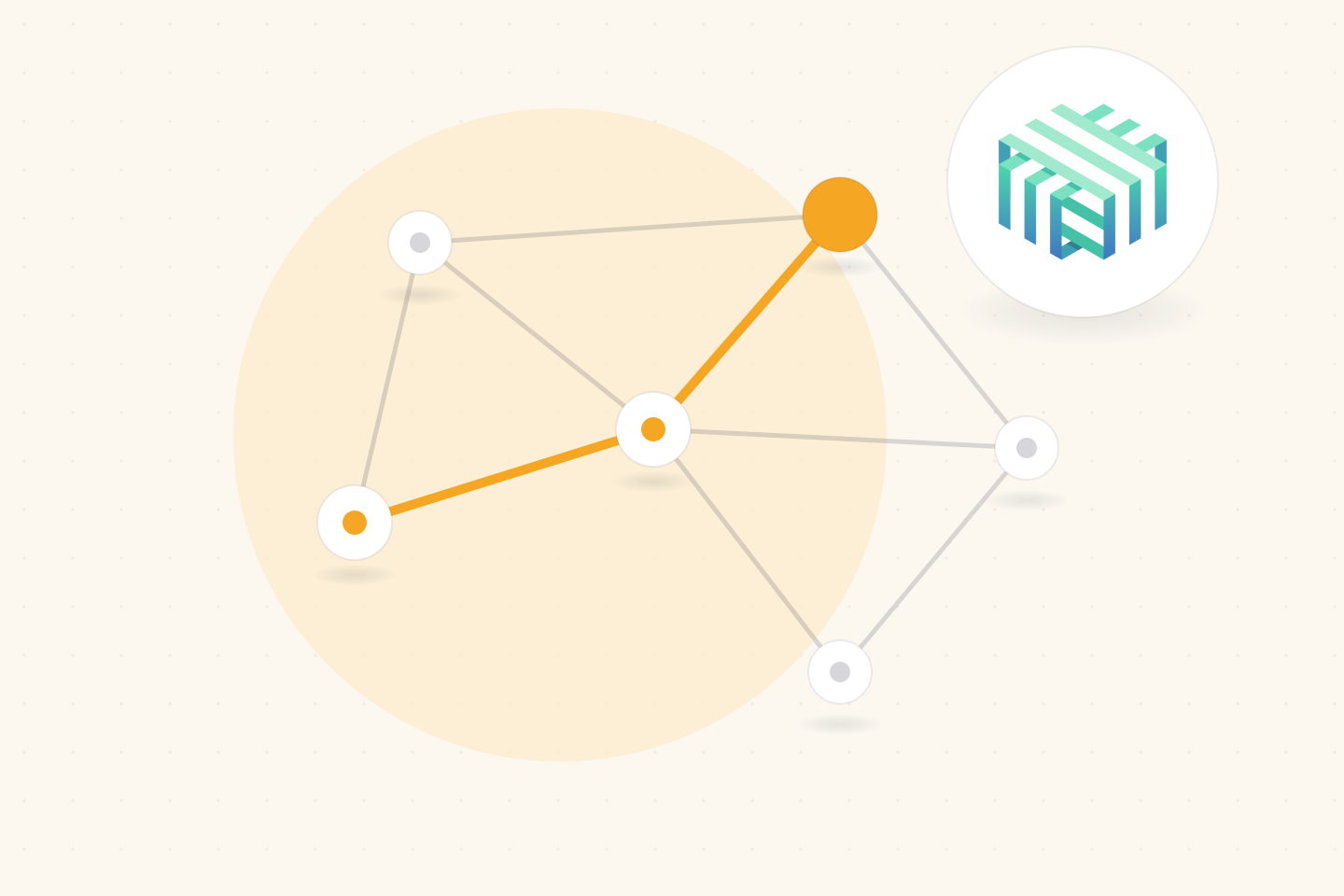
Sandboxes use application-layer isolation and smart request routing to create lightweight, isolated testing environments for each pull request.
Every developer knows the thrill of rapid coding cycles — write, test, iterate, repeat. This “inner loop” is where engineers thrive, experiencing that perfect flow state that produces our best work.
But in today’s microservices landscape, there’s a jarring disconnect when we hit the “outer loop” — the integration, testing and deployment phase where everything seems to grind to a halt. What should take minutes stretches into hours. What should be seamless becomes fragmented. What should build confidence creates anxiety.
Sound familiar? It should. This broken workflow has become the accepted norm in microservices development, but it doesn’t have to be.
The Feedback Loop Crisis in Modern Development
Let’s talk about feedback loops – the heartbeat of development productivity. Engineers thrive in what we call the “inner loop” (writing code, running unit tests, making local changes) where feedback is immediate. But microservices have created a massive disconnect with the “outer loop,” where feedback can take hours or even days.
Recent research from DX highlighted in its Core 4 framework white paper shows a direct correlation between developer experience improvements and engineering productivity. According to the paper’s findings, even modest improvements in developer workflows can save multiple hours per developer per week. But the real productivity killer isn’t just the time lost: It’s the fragmentation of development flow.
The Painful Trade-Offs of Conventional Testing
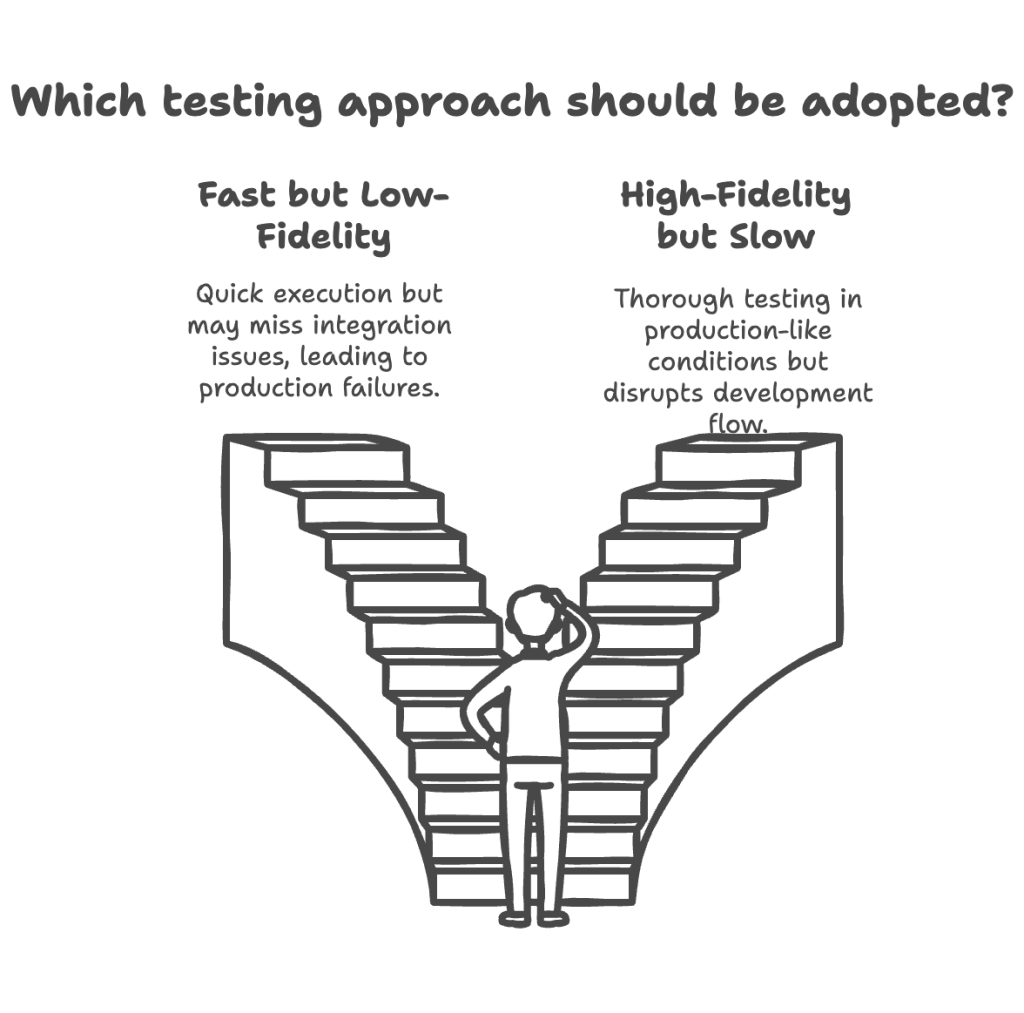
Traditionally, developers faced two deeply flawed options:
- Fast but low-fidelity testing (unit tests with mocks) that fail to catch integration issues
- High-fidelity but painfully slow testing (on staging environments) that breaks development flow
This forces a brutal trade-off: Either accept lower quality or accept slower development. Neither is sustainable in today’s competitive landscape.
In recent developer experience surveys across the industry, flaky tests consistently rank as one of the top frustrations for developers. When engineers can’t trust their testing infrastructure, they’re essentially building on shaky ground, never knowing if failures represent real issues or testing inconsistencies.
Enter Sandbox Environments: Breaking the Trade-Off
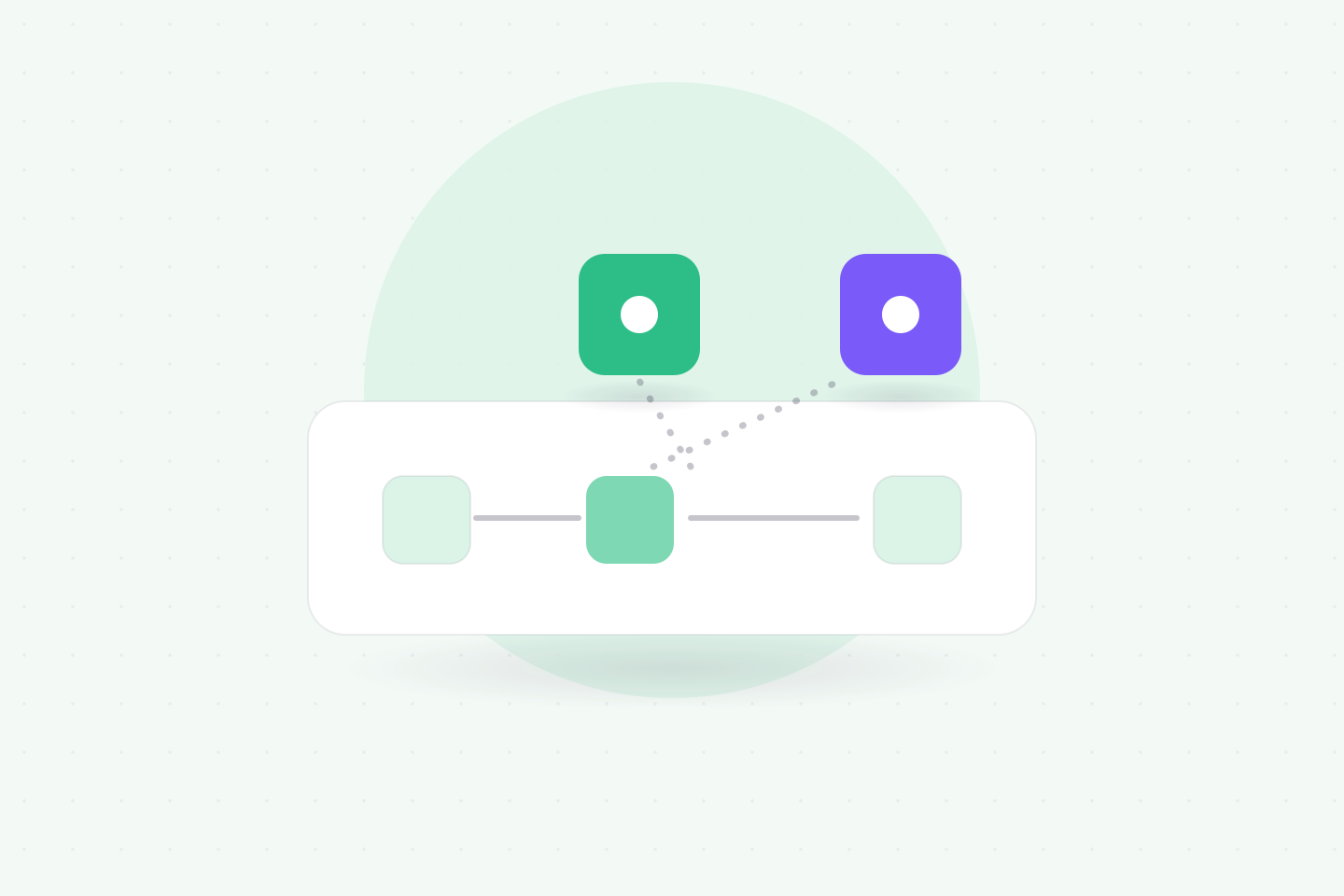
Sandbox environments fundamentally disrupt this paradigm by enabling high-fidelity testing at inner-loop speed. Rather than duplicating your entire infrastructure (prohibitively expensive at scale), sandboxes use application-layer isolation and smart request routing to create lightweight, isolated testing environments for each pull request.
The difference is transformative. Instead of waiting for post-merge integration issues, developers can validate changes against real dependencies before merging. This approach dramatically reduces integration bugs while cutting debugging time from hours to minutes. Organizations implementing sandbox environments consistently report fewer integration issues reaching production and significantly faster resolution times when problems do occur.
How Sandboxes Transform Key Feedback Loops
Let’s examine how this changes each critical feedback loop:
Signadot spins up isolated sandboxes on the Kubernetes cluster you already run, so every change is validated against real services before it merges. The free tier is open to every developer.
Product/UX Feedback
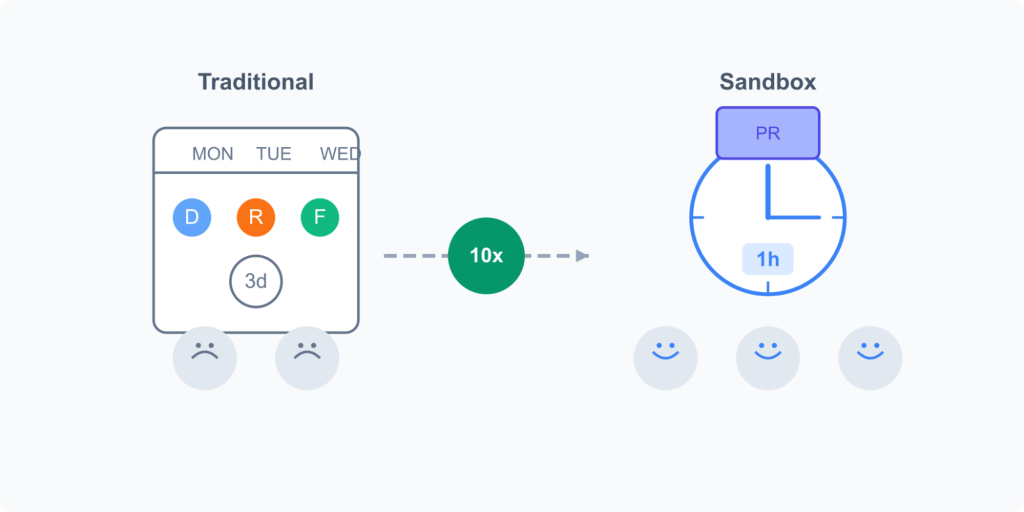
Traditional approach: Stakeholder feedback occurs days or weeks after development.
- With sandboxes: Instant preview URLs for every pull request (PR) enable stakeholder review in minutes.
- Impact: 10x faster iteration cycles on features; dramatically improved alignment
I witnessed this firsthand with a FinTech customer that reduced its feedback loop from two to three days to under an hour by providing preview functionality from PRs and workstations.
Integration Testing
Traditional approach: Multiple PRs deployed to staging create a “murder mystery” when issues arise.
- With sandboxes: Test one PR in isolation against real dependencies.
- Impact: Issues traced to specific changes; debugging time reduced by 80%
A retail customer found that context-switching costs alone were consuming 20 to 30 minutes per interruption. With sandboxes, these costly switches virtually disappeared. (For where integration testing sits in the wider lifecycle, see the complete guide to microservices testing.)
Cross-Team Collaboration
Traditional approach: Frontend and backend teams deploy sequentially, waiting for each other.
- With sandboxes: Teams collaborate in parallel with integrated testing pre-merge.
- Impact: Eliminates days of coordination overhead per feature
One engineering director told me: “We used to have a Slack bot just to queue access to staging environments. On Fridays, wait times stretched to four or five hours.” Sandboxes eliminated that bottleneck entirely.
Automated Testing
Traditional approach: Run full test suite post-merge on a schedule.
- With sandboxes: Run targeted tests specific to each PR pre-merge.
- Impact: Immediate feedback vs. delayed detection; focused testing vs. blunt instruments
By isolating changes in sandboxes, tests become more reliable and deterministic. The targeted approach means failures directly pinpoint specific issues rather than creating a complex investigation involving multiple changes.
The Context-Switching Tax
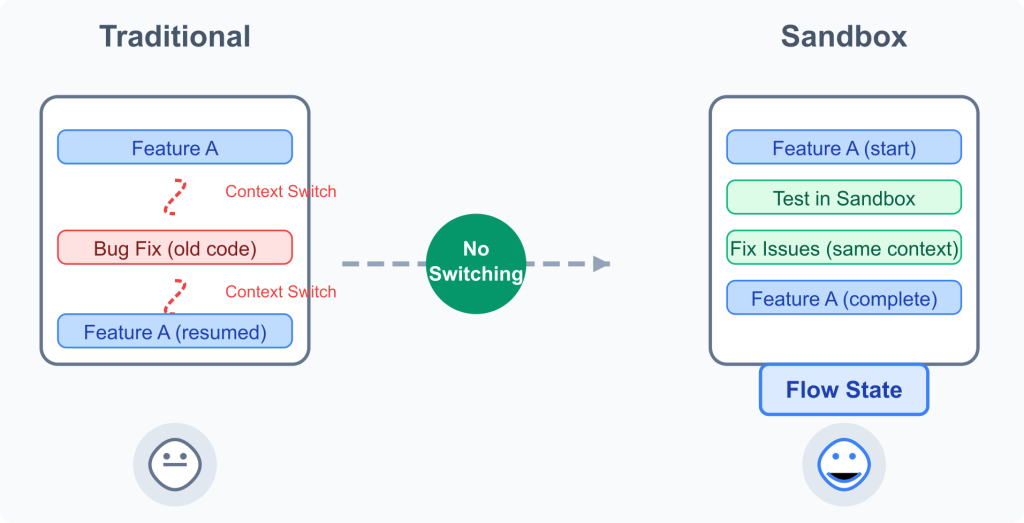
The hidden cost in traditional workflows is the brutal context-switching tax. When an engineer is deep in flow on a new feature and gets interrupted with integration issues from previous work, each switch costs 20 to 30 minutes of productive time, according to multiple studies.
By shifting integration testing left into the PR workflow, sandboxes eliminate these expensive disruptions. Engineers stay in flow, addressing integration issues while the code is still fresh in their minds.
Breaking Free From Productivity Bottlenecks
The microservices testing bottleneck has become so normalized that many teams accept constant context-switching and broken feedback loops as inevitable. With sandbox environments, engineering teams finally escape the painful trade-offs:
- Developers stay in flow, resolving integration issues while code is fresh.
- Feedback loops shrink from days to minutes, keeping productivity high.
- Cross-team collaboration happens in parallel rather than sequential bottlenecks.
These transformative improvements directly translate to happier developers, faster feature delivery and higher-quality software.
Ready to supercharge your team’s productivity? Try Signadot for free or book a demo to see how sandbox environments can transform your development workflow.